Beyond Likes. Into Sales.

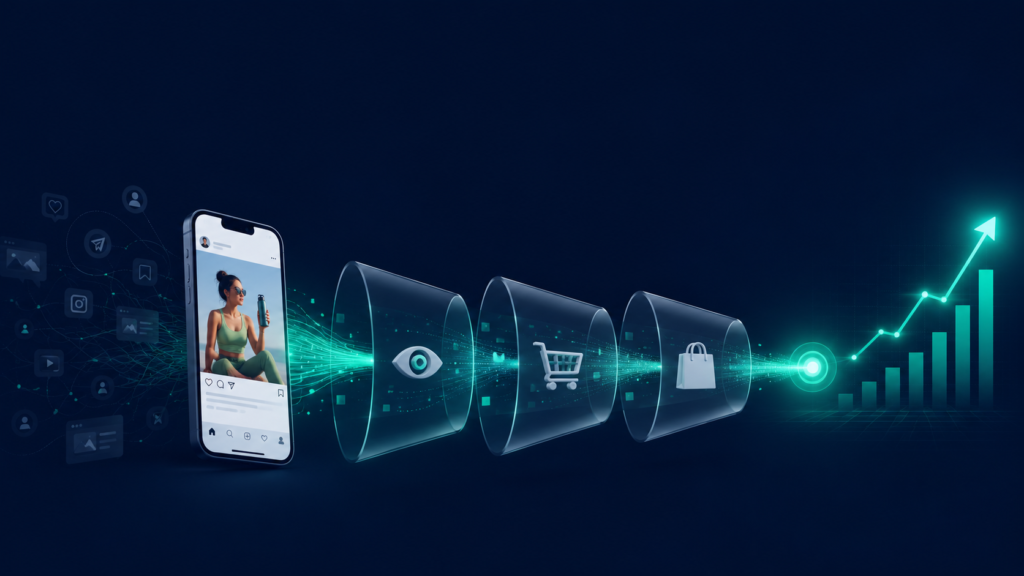
If you want to make influencer marketing profitable on Shopify, here’s the uncomfortable truth most brands discover somewhere between their 15th and 50th creator: the channel can be quietly losing money for months — and the way most people track it, you’d never know.
You see the likes. You see the discount codes that get redeemed. You see traffic spikes in Google Analytics. What you cannot see is the part that actually decides whether you turn a profit — what happens between the post and the sale. Which creator’s audience browsed but never carted. Which one drove buyers who came back and bought again. Which product killed the deal at checkout. That gap is where influencer budgets go to die.
This guide is about closing that gap. Not with more spreadsheets or another vanity dashboard, but by using the four kinds of data that actually move profitability — and the specific decision you make with each one. If you run a creator programme on Shopify and you have ever sat in a meeting unable to answer “so, did it work?”, this is the playbook.
Why most influencer campaigns lose money quietly
The problem is not that influencer marketing does not work. It is that the standard tracking stack measures the wrong thing.
Likes and comments measure attention. Discount codes measure the fraction of buyers who remembered to type a code. UTM click counts measure that traffic arrived. None of them measure what that traffic did. A creator can send 247 visitors to your store, drive zero redeemed codes, and still be responsible for a real revenue spike — because plenty of those visitors bought without the code, or bought three days later from a retargeting ad. Your spreadsheet records that creator as a failure. You stop working with them. You just cut one of your best performers because the data was blind to them.
Multiply that across a roster of 30 creators and you get the situation almost every scaling brand ends up in: paying everyone roughly the same, with no real idea who earns it. Some creators drive noise. Some drive buyers. They look identical in a discount-code report. Profitability lives entirely in telling them apart.
The shift: from vanity metrics to revenue data
Making influencer marketing profitable comes down to a single change in what you measure: stop measuring what happened on the post, and start measuring what happened in your store as a result of it.
That means tracking the full path from a creator’s link through to a Shopify purchase — every click, every product view, every cart, every checkout, every sale — and attributing it back to the creator who started the journey, even when the buyer takes a week and three touches to convert. Get that, and four specific profitability plays open up. The rest of this guide is those four plays.
Play 1 — Use funnel data to fix the leak before you spend more
Before you spend another dollar acquiring creators, find out where the traffic you already have is leaking. Full-funnel data shows you, per creator and per campaign, exactly which stage your influencer visitors drop off at — and each drop-off point has a different, fixable cause.
- Drop-off at product view usually means a mismatch between the creator’s content and your product page. The audience clicked expecting one thing and landed on another. Fix: rebrief the creator, or align the landing page to the promise in the post.
- Drop-off at cart often means the wrong product for that audience, or a price that does not fit. Fix: test a lower-priced entry offer for that creator’s traffic.
- Drop-off at checkout is frequently shipping. People want it, they have committed, and then a postage line kills the deal. Fix: offer free shipping on creator-driven traffic and measure the lift.
The point is that “the campaign did not convert” is not a verdict — it is a question. A campaign where 88% of visitors never reach a cart is not a bad creator; it is a leak with a postcode. Find the stage, fix the cause, and the same creator spend suddenly returns more. This is the cheapest profit you will ever find, because it costs nothing extra — you are recovering revenue you already paid to attract.
Play 2 — Use multi-touch data to pay the right creators
Buyers rarely convert on the first touch. Someone discovers you through one creator, follows you, sees a second creator weeks later, and finally buys after a third. Last-click attribution hands all the credit to whoever was last in line and zero to the two creators who did the real work of building intent.
Run your programme on last-click and you will systematically over-pay your “closer” creators and starve the “introducer” creators who fill the top of your funnel — then wonder why your conversions dry up after you cut them. Multi-touch journey data shows you every creator who touched a sale, not just the last one. In a single attributed journey you might see three creators share the credit for $3,054 of revenue — and discover that the creator with no direct sales was present in most of your best journeys.
The profitability move: pay creators for the role they actually play in the journey, and protect the introducers who do not close but make closing possible. When you can see the full path, you stop cutting the wrong people.
Play 3 — Use role intelligence to stop paying everyone the same
This is the play that separates a profitable programme from an expensive one. Every creator plays a different role, and the mistake almost every brand makes is paying and measuring them all the same way.
When you classify each creator by what they actually do in the buyer journey, three groups appear:
- Introducers bring awareness. They sit at the top of the journey and rarely close — and that is their job. Measure them on reach and on how often they appear in journeys that eventually convert, not on direct sales. Cutting an introducer because they do not close is like firing your top-of-funnel ads for not being your checkout page.
- Closers convert warm audiences. They turn intent into purchases. They are worth more per post — but only because the introducers warmed the audience first.
- Warm-up creators stuck mid-journey are the ones to test on. They are doing something, but not finishing. Give them a stronger call-to-action brief and re-measure.
The profit comes from two decisions this unlocks. First, you pay each creator according to their role instead of a flat rate, so your budget flows to where it earns. Second — and this is the highest-leverage move in the entire playbook — you pair your best introducer with your best closer and run them together every campaign. You stop managing a list of creators and start building a creator ecosystem where the parts compound. That is a structural advantage your competitors running discount-code spreadsheets cannot copy, because they cannot even see it.
Play 4 — Use product data to brief the right product
Not every product converts for every audience. A creator can be perfect and still post about the one product their audience browses but never buys. Product intelligence shows you cart-to-purchase rates at the variant level, across every creator and campaign, and flags two signals automatically:
- High Convert products are the ones a given audience actually buys, not just browses. The move is simple: put your High Convert product into every brief for that creator. You already have proof it works with their audience.
- Price Friction products are the ones people clearly want — high browse, high cart — but will not pay for. Do not promote harder; that just buys more abandoned carts. Fix the offer first: test a bundle, an intro price, or a smaller pack size, then promote.
Done well, this means every creator is briefed on the product that is statistically most likely to convert their specific audience — instead of whatever you happen to be pushing that month. Same creators, same spend, more sales.
How to make influencer marketing profitable: the monthly loop
None of these plays is a one-off. Profitability comes from running them as a loop, every month:
- Find the leak. Check funnel drop-off by creator. Fix the biggest single leak before doing anything else.
- Credit honestly. Review multi-touch journeys. Identify your introducers and closers from the data, not from gut feel.
- Reallocate. Pay by role, protect the introducers, pair your best combinations, and put your test budget on the warm-up creators.
- Brief on what converts. Match each creator to their High Convert product. Fix or pause Price Friction items.
- Repeat. Next month, the data is sharper and the decisions get easier.
This is the difference between a programme you defend with screenshots and one you defend with a single chart that shows revenue per creator. The first is a 20-minute scramble before every meeting. The second is a budget conversation you win.
How to get this data without a data team
Everything above assumes one thing: that you can actually see the full path from creator link to Shopify sale, per creator, in real time. Most brands cannot — which is why they are stitching together UTM builders, Google Sheets and a blended-attribution tool at midnight, and still not trusting the number.
That is exactly the gap Winfluencer’s creator analytics app was built to close. It installs on Shopify in about 60 seconds, generates a unique tracking link per creator automatically, and attributes every click, browse, cart and purchase back to the creator who drove it — with attribution that survives Safari’s tracking prevention and ad blockers, so you are not losing a third of your data to privacy changes. The four plays in this guide map directly to what it shows you: full-funnel drop-off, multi-touch journeys, creator role classification, and product-level conversion signals.
You do not need a data analyst. You need the data, and a clear decision to make with each piece of it. This playbook is the decision. The tool is how you see it.
See which of your creators are actually making you money → Get early access